

Glassforms
A brief review

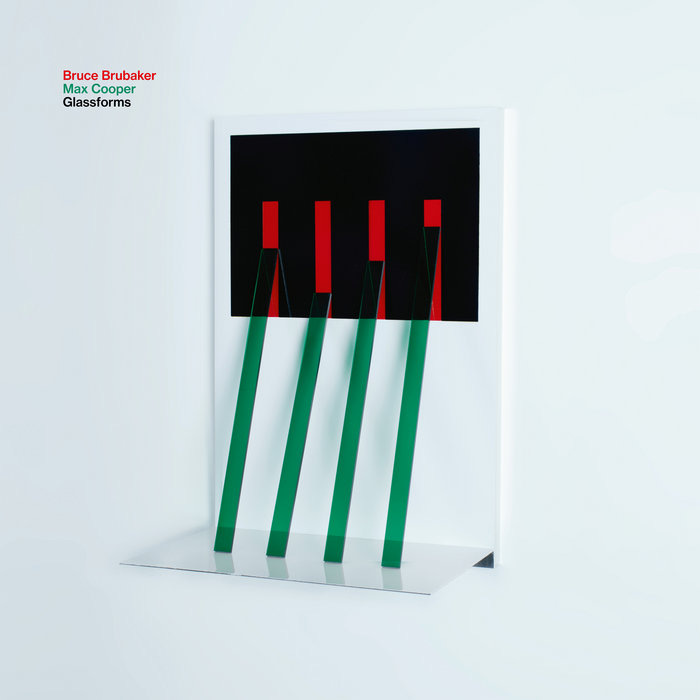
Idagio: https://app.idagio.com/albums/glassforms?utm_source=pcl
Tidal: https://tidal.com/album/136636960/u
Qobuz: https://open.qobuz.com/album/djmksy48j70la
“Prelude 1” begins with an eerie piano+synth combination, then transitions into the more familiar Philip Glass piece. The synthesizers (Max Cooper) are driven by a “new system for musical expression,” which is roughly the same type of thing, often called a NIME for New Interface for Music Expression, I designed, implemented, and evaluated for my MS in computer science several years ago. This is at a much higher level of creativity and competence than what I was able to manage despite getting some excellent advice from a member of my thesis committee, a music professor.
This (“Prelude 1” and others) reminds me of Yann Tiersen’s Kerber album, with Glassforms featuring an acoustic piano (Bruce Brubaker) paired with fuzzy sounds coming into and going out of the mix. The swirling mix of effects and the unaltered acoustic piano work together well on “Prelude 1.”
I’m listening with a headphone amplifier made by Schiit Audio, a DacMagic 100 digital to analog converter (DAC) made by Cambridge Audio, and a pair of Focal Clear Mg open-back headphones. I would be listening on my home stereo, with tower speakers, were everyone else not asleep.
The fourth track, “The Poet Acts,” has a glissando-based synthesizer part that complements the harmonies of the piano. The changes in timbre, from clean to fuzzed, with many of the synthesizer parts, keeps the music re-forming into new configurations. The relative simplicity (or perhaps, better, the minimalism) of the piano parts allows for lots of flexibility with the synthesizer parts. The piano and the synthesizers are on an equal footing, neither being the constantly dominant instrument.
One complaint I have about Bandcamp, which is what I am using to listen to Glassforms, is the interrupting pause during transitions from one track to the next. This album relies upon a clean segue from one track to another. I have decided to download the FLAC files and play them with foobar2000, which does not put annoying, disruptive gaps between tracks.
The track “Two Pages” has a deceptively simple/complex piano part that opens the piece, which a rapidly syncopated array of synth sounds join and scratches, taps, breathes, and fades out as a vibrating tone rises. This track has gotten my body and head moving, even my toes. I’m in bare feet, keeping them together for warmth. Gradually, I have calmed, and I have become absorbed in a peaceful oasis of the piano and the increasingly overlapping synths.
I think I would like to try composing and performing, on guitar or viola da gamba, a minimalist piece like the piano part here.
Starting with “Prelude 4,” I’m using the Meier Crossfeed DSP component that comes with newer versions (2.0+) of foobar2000. This effectively mixes the right and left channels so each ear hears the other channel (right hears left at a low volume), though the details are unknown to me. I think it sounds better, more like my stereo speakers.
“Prelude 4” is entirely synthesizer; no piano. Following that is “Mad Rush,” and I remember that this version of it becomes very intense, even painful. The beginning has the clean piano plus a piano-like synthesizer. Again, both piano and synthesizers are on an equal footing. This beginning section is peaceful. The synthesizer is what I would call twinkling. And then it becomes intensely overdriven with loud, high-pitched harmonics. This is a madder rush than when I have heard Glass play it on piano. The synth falls away before reappearing as a lightly overdriven, low, undulating drone. And the twinkling is there, and I can hardly distinguish the twinkling synth from the acoustic piano.
Following Tod Machover’s philosophy of augmenting classical acoustic instruments, which he has done many times over the years—including collaborating with Yo-Yo Ma, Joshua Bell, and Matt Haimovitz—electronic artist Max Cooper leaves the acoustic piano alone, only adding synths. This is what Machover did with Hyperstring Trilogy, featuring his hypercello, hyperviola, and hyperviolin, adding sensors to the instruments without modifying them otherwise.
The album finishes with “Opening” from Glassworks, the harmony of which nearly matches that of “Mad World” by Tears for Fears, both released in 1982.
Happy listening! :-)